2017 — 2018Marketplace Internationalization
Building the basics for Internationalization
The conception of Marketplace came from the popularity of groups on Facebook that were dedicated to buying and selling within local neighborhoods with in-person meet-ups. This acted as a safer way for people to transact on second-hand goods vs. Craigslist or Kijiji.
With its roots as a hackathon project, our team discovered that the technical structure it was built on hadn’t accommodated for variables needed to expand to international countries so we set out to build them.
Localized currency
On Facebook, there hadn’t previously been a concept of international currencies.
As a part of our first expansion, we needed to ensure that we could build a framework to support currencies ranging from a rupee (₹) to a euro (€).
We researched to make sure that currency amounts were accurately represented in each region.
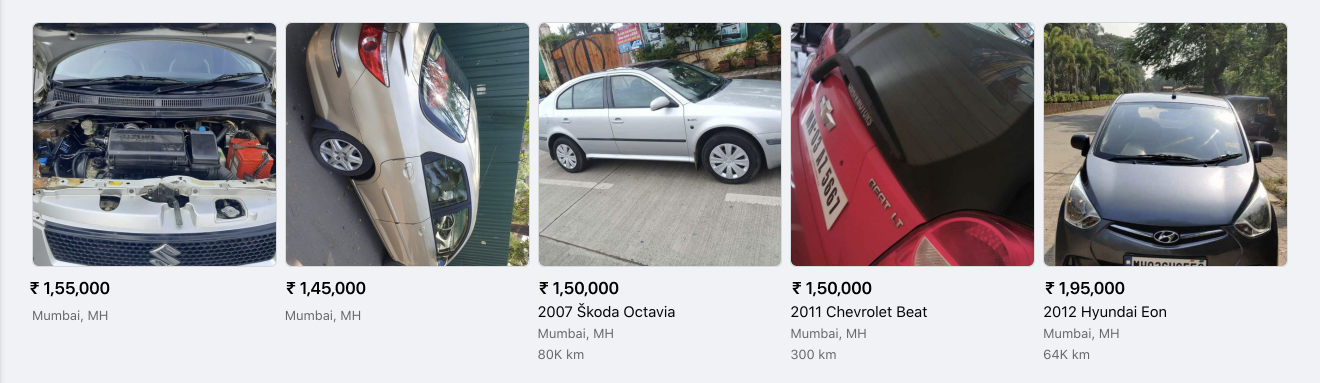
In India, due to a numeral system, a comma is used at levels of thousand, lakh and crore.
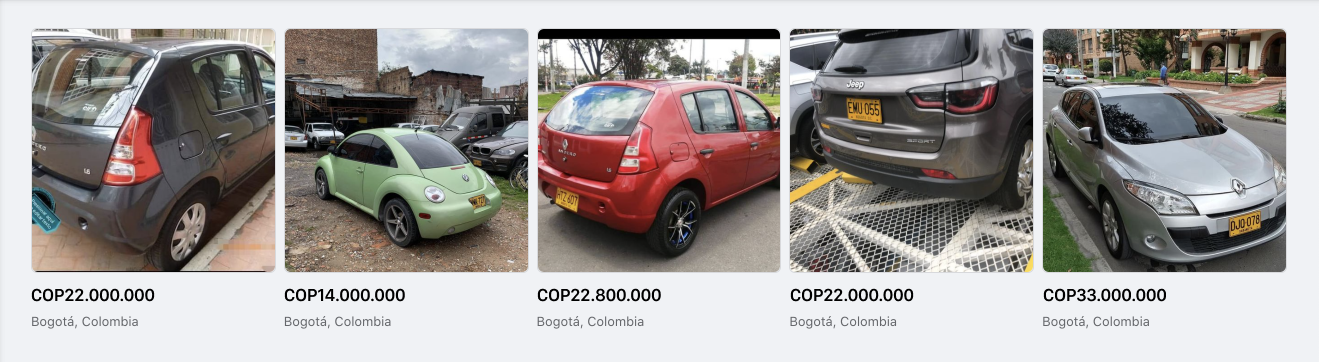
A point is the thousands separator in many non-English speaking countries like Colombia.
Scaling Marketplace Features for International Markets
In the first iteration of Marketplace, the currency filter was a slider that populated the maximum values with 100,000. This was a hard-coded precaution against spam appearing in search results.
However, it was under the assumption the user was looking at dollar values and Westernized standards of living. So when a user from Chile looked at cars, the price slider only allowed for roughly 100,000 pesos which equates to about a couple hundred American dollars.
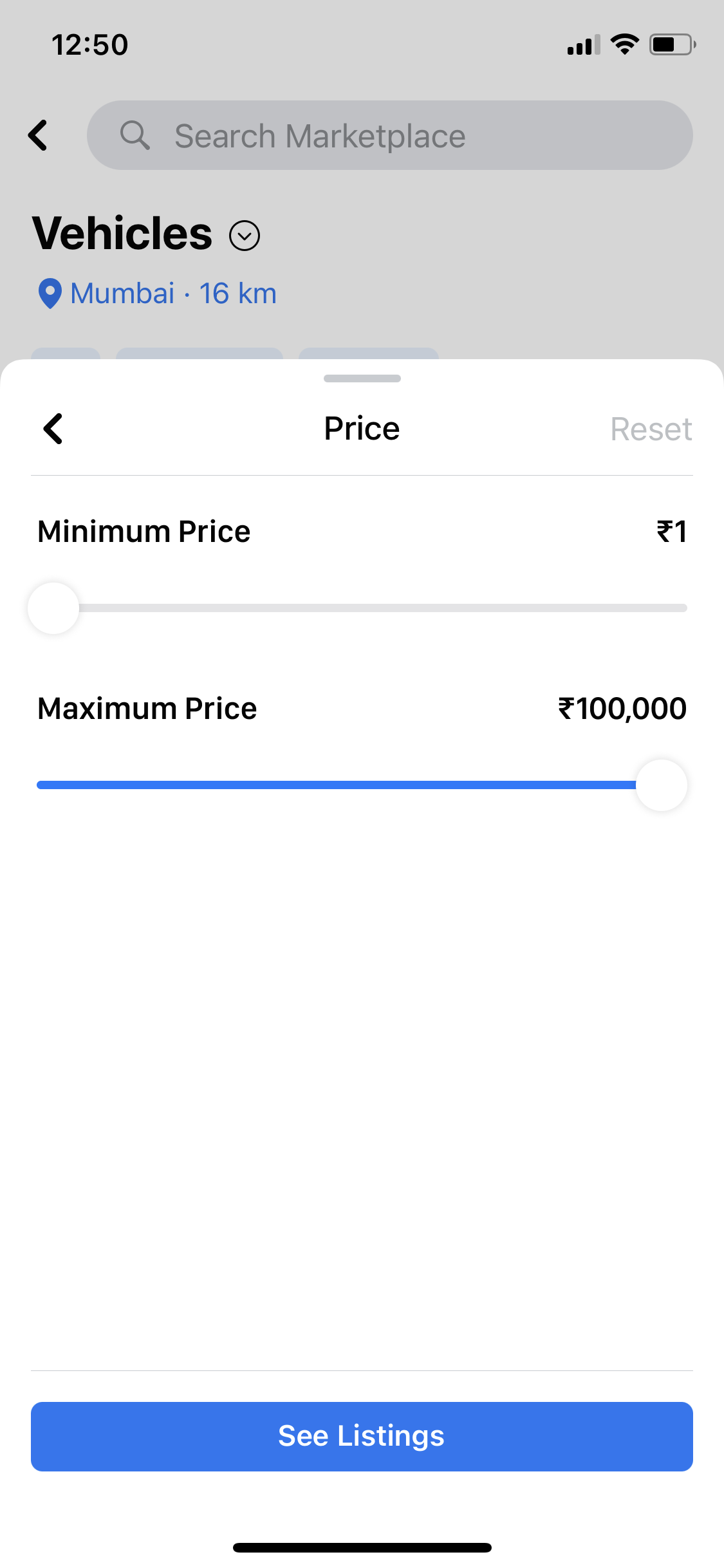
Before
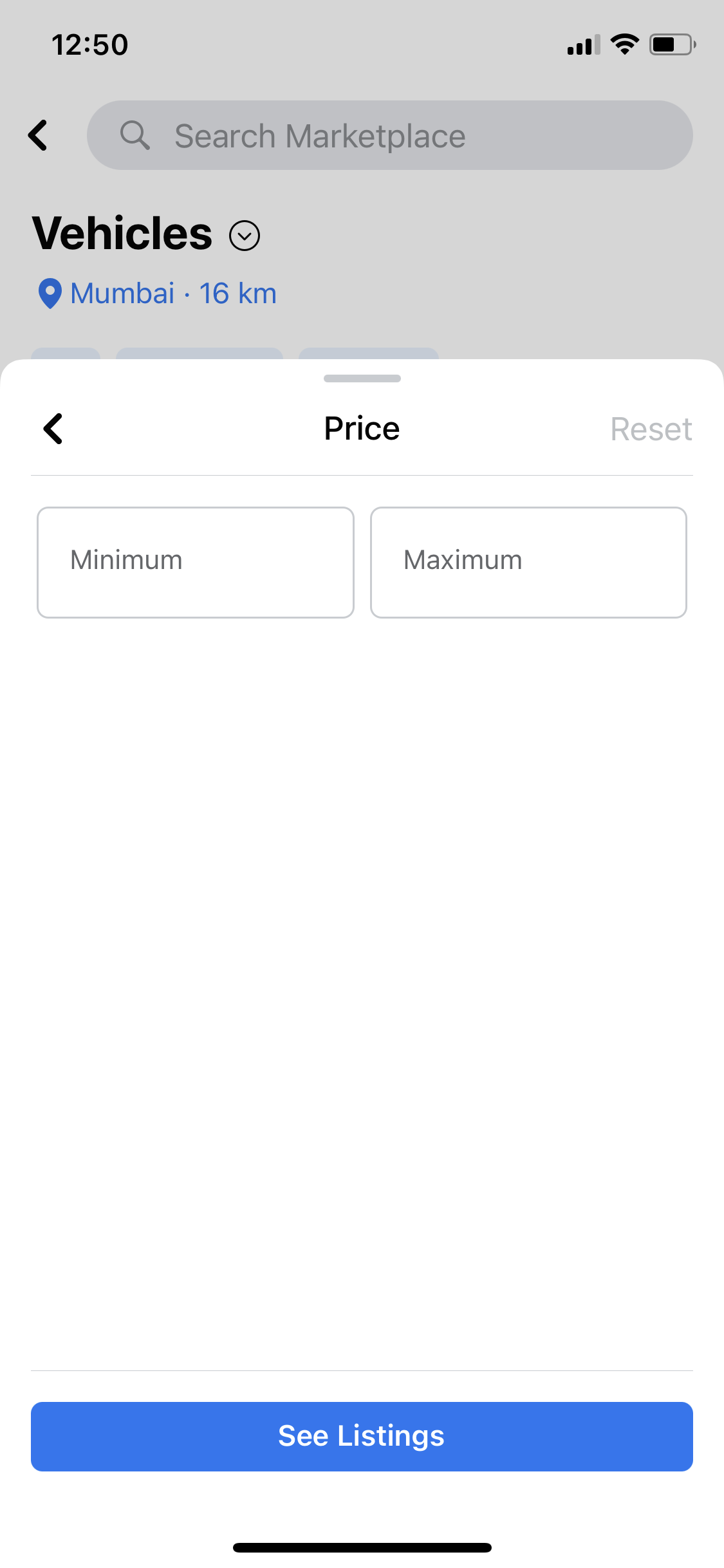
After
Through testing, we learned that the sliders were particularly frustrating because users saw listings for over 100,000 but they could only narrow their search up to that value. We wanted to create a solution that felt more empowering by removing the hard-coded limitations and enabling freeform values be inputted instead. Users were already used to sifting through and being savvy of spam posts meaning they would much rather have accurate controls than browsing guardrails.
Through this, we saw the number of users finding success in a purchase from a filtered search improve significantly and the overall number of successful sales in international countries improved significantly.
Translations
Through our research, we noticed lost opportunities for buyers and sellers restricted by language barriers. This was particularly apparent in countries that neighbored other countries that had a different national language. This was common in parts of Europe and South America.
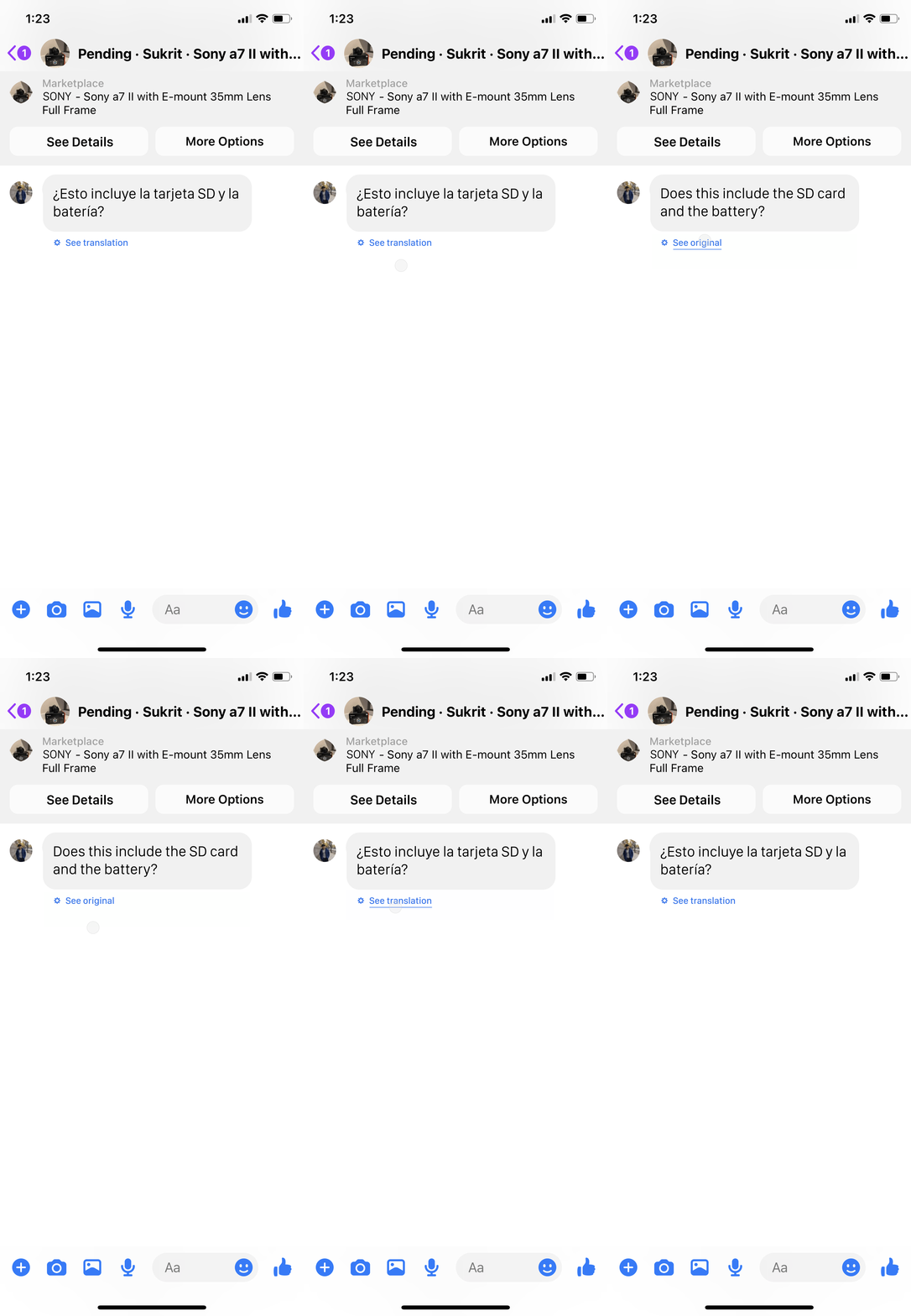
Using Facebook’s sophisticated translation tools, we were able to provide translated conversations for buyers and sellers that may not speak the same language.
In this feature, we built a simple switch underneath each chat bubble that we detected was outside of the recipient’s preferred language (which is established in their personal settings). The switch enables users to quickly translate conversations and respond in their preferred language.
This feature could be disabled in the user’s Marketplace settings and only applied to Marketplace conversations.
Shoutout to my wonderful engineers Andrés Lopez De Leon and Greg Nelson. We built this on iOS, Android, and FBLite.
WhatsApp Intergrations
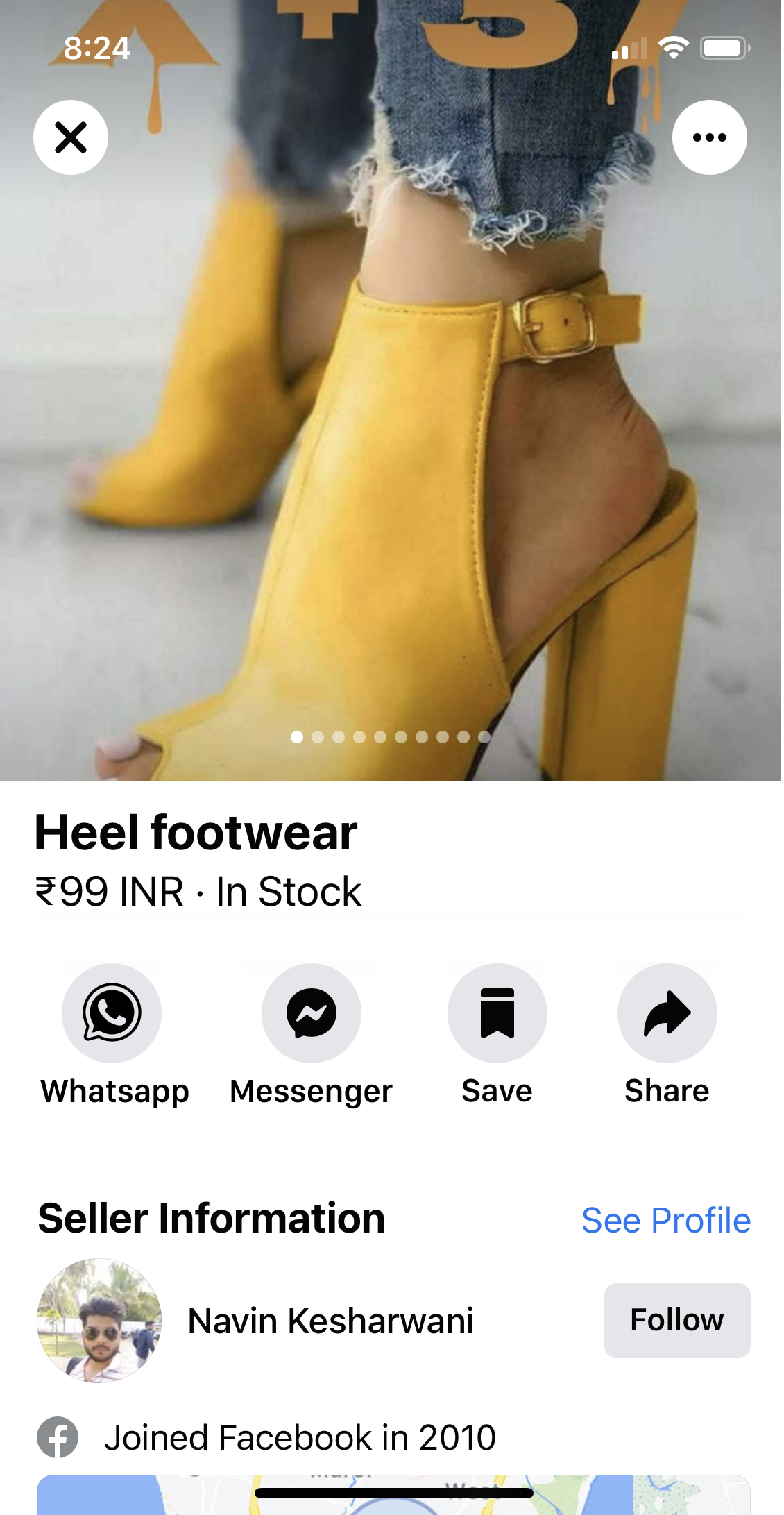
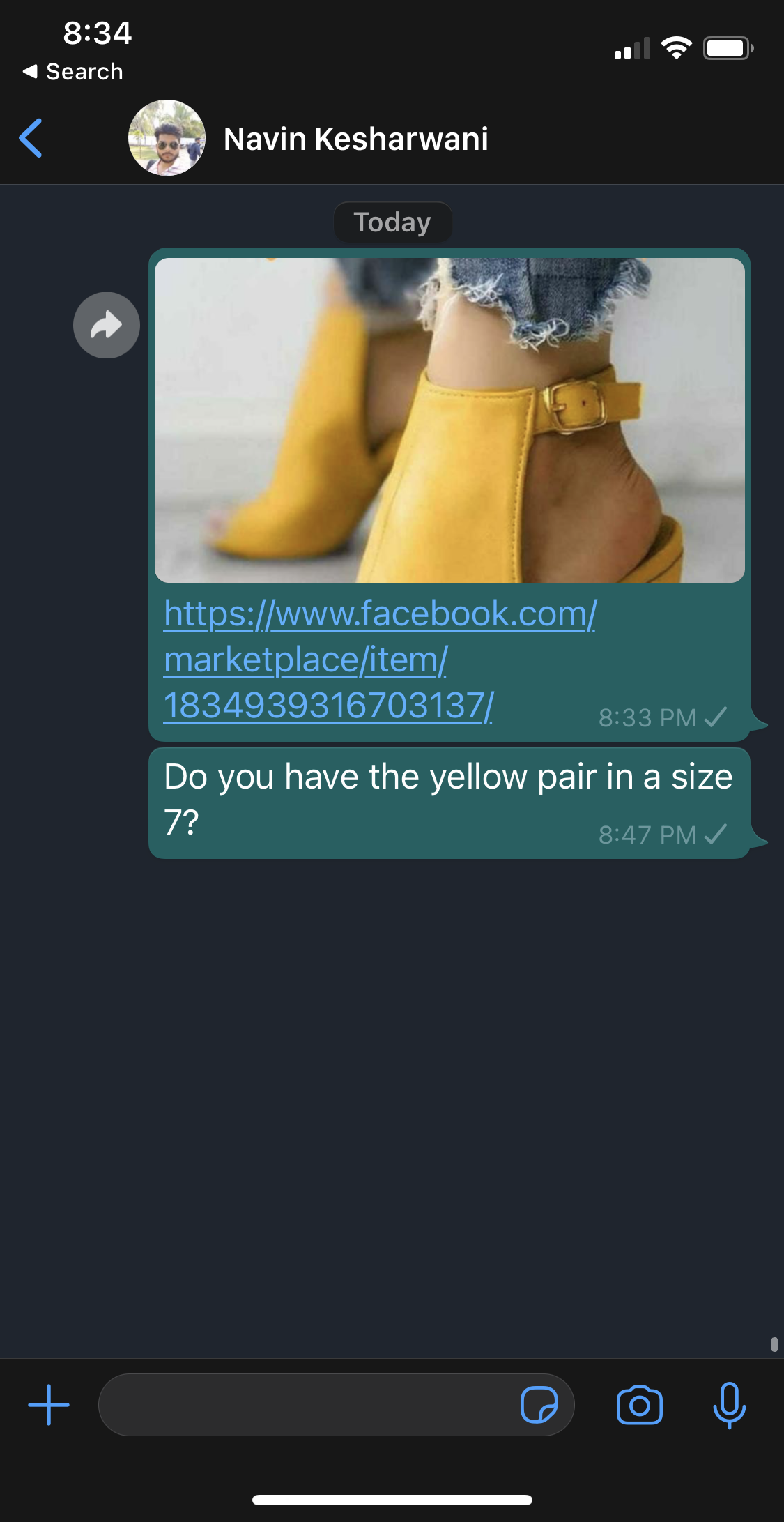
In North America, most users are familiar with using Messenger so having Marketplace conversations appear there made sense. However in regions like South America, India, and Southeast Asia, they prefer WhatsApp instead.
We were noticing that conversations were often dropped or left unread for weeks because Messenger wasn’t the tool that users frequented for daily communication.
We enabled Sellers to connect their WhatsApp accounts to their Marketplace profile to enable quick inquiries of specific listings.
Huge shoutout to Todd Hamilton who led this feature design. This was built for Android and FBLite.
Exploring Unique Opportunities
While creating the foundation for internationalization, our team simultaneously conducted research to determine the strategy for Facebook’s unique commerce niche in broader markets.
Unsurprisingly, we learned that the social aspect of our platform enticed users to shop on Facebook.
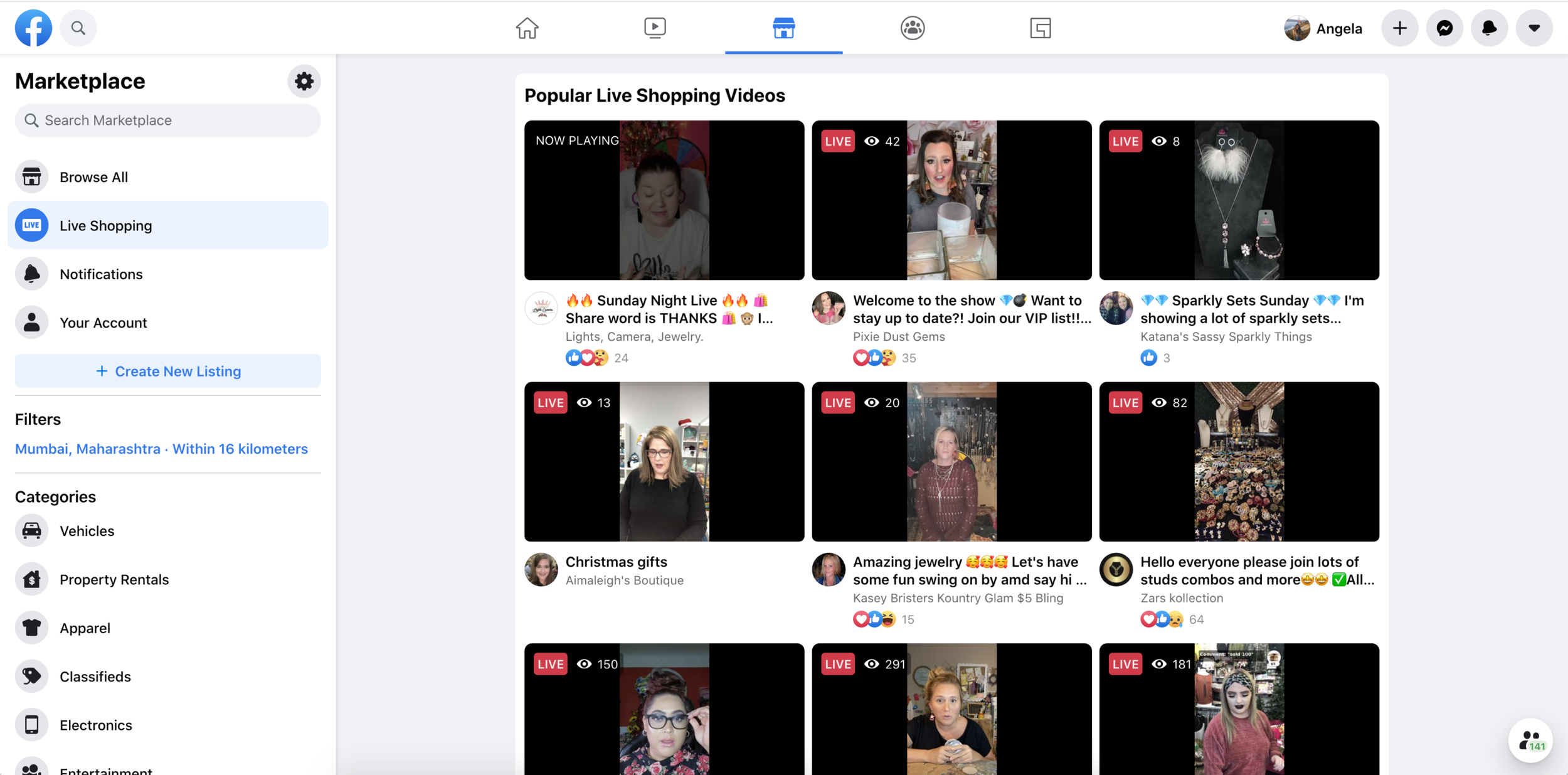
Live Video Shopping
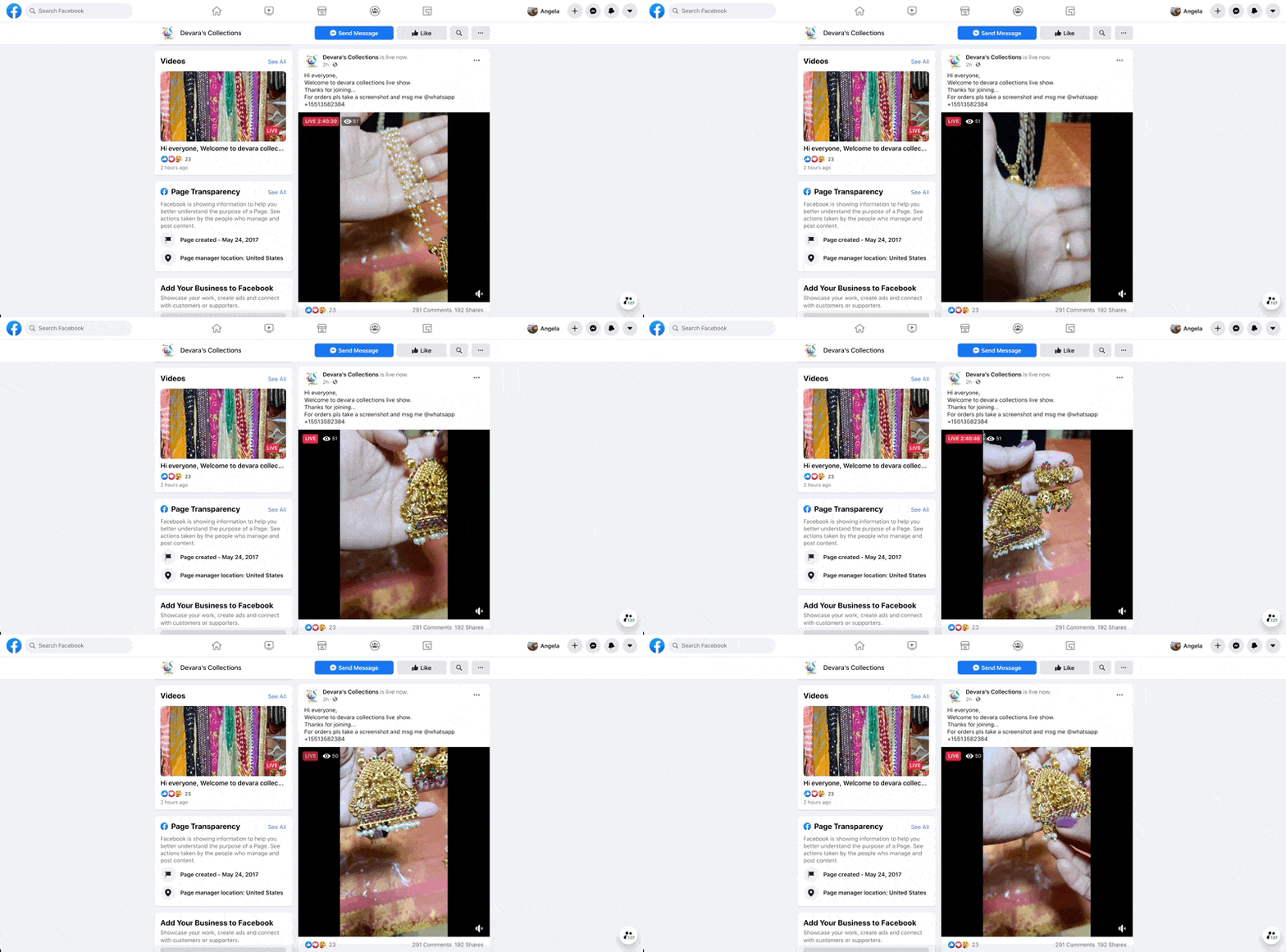
Internationally, Live Video shopping is one of the primary ways that users sell on Facebook. Sellers video stream on their shop pages and update their followers on the time they’re next online.
When the stream is online, followers will tune in and make bids on items, ask the seller to show specific details on camera, and even request for items for the seller to buy.
The way that these live video streams work is gamified for followers to feel like they’re participating in an auction and it gives sellers the opportunity to create an engaged community.
The problem with these streams was that they didn’t gain a lot of external visibility from users that didn’t already follow the seller. This made promoting their live videos a manual job which was extremely hard without paid ads.
We introduced a feature on Marketplace that allows sellers to stream directly to their locality to give seller the opportunity to reach a broader audience. This also gave buyers an opportunity to explore new live sellers in their area.

Impact
We launched internationally to Austria, Australia, Belgium, Canada, Chile, the Czech Republic, Denmark, Finland, France, Germany, Hungary, Ireland, Italy, Luxembourg, Mexico, Netherlands, New Zealand, Norway, Portugal, Spain, Sweden, Switzerland and the UK.
We significantly improved WAU (Weekly Active Users), retention rates, browse time, and product inquiries internationally.
Next Steps
After rounds of research and competitive analysis, we were able to to determine key opportunity areas for Marketplace to thrive internationally.
We explored many concepts of social shopping including virtual small business storefronts, highlighting social connections and community, and social shopping with friends/family. These features are still under development.
We worked with leadership to create a phased approach to scale North America and internationally in tandem over time.